Short answer: for most homeowners, yes — but the math looks different than it did a year ago. Is Solar Still Worth It in 2026 Without the Tax Credit? The federal tax credit for direct solar ownership ended on December 31, 2025, which means if you buy or finance a system outright in 2026, you won't get that 30% break on your taxes anymore. That's a real change, and it does push the payback period out further for a lot of people.
But that's not the whole story. Solar leases and power purchase agreements (PPAs) can still qualify for a different federal credit, several states still offer their own rebates, and net metering continues to be the biggest source of long-term savings in many areas. So the real question isn't "is solar still worth it" — it's "is it still worth it for your home, your bill, and your state." Let's break that down.
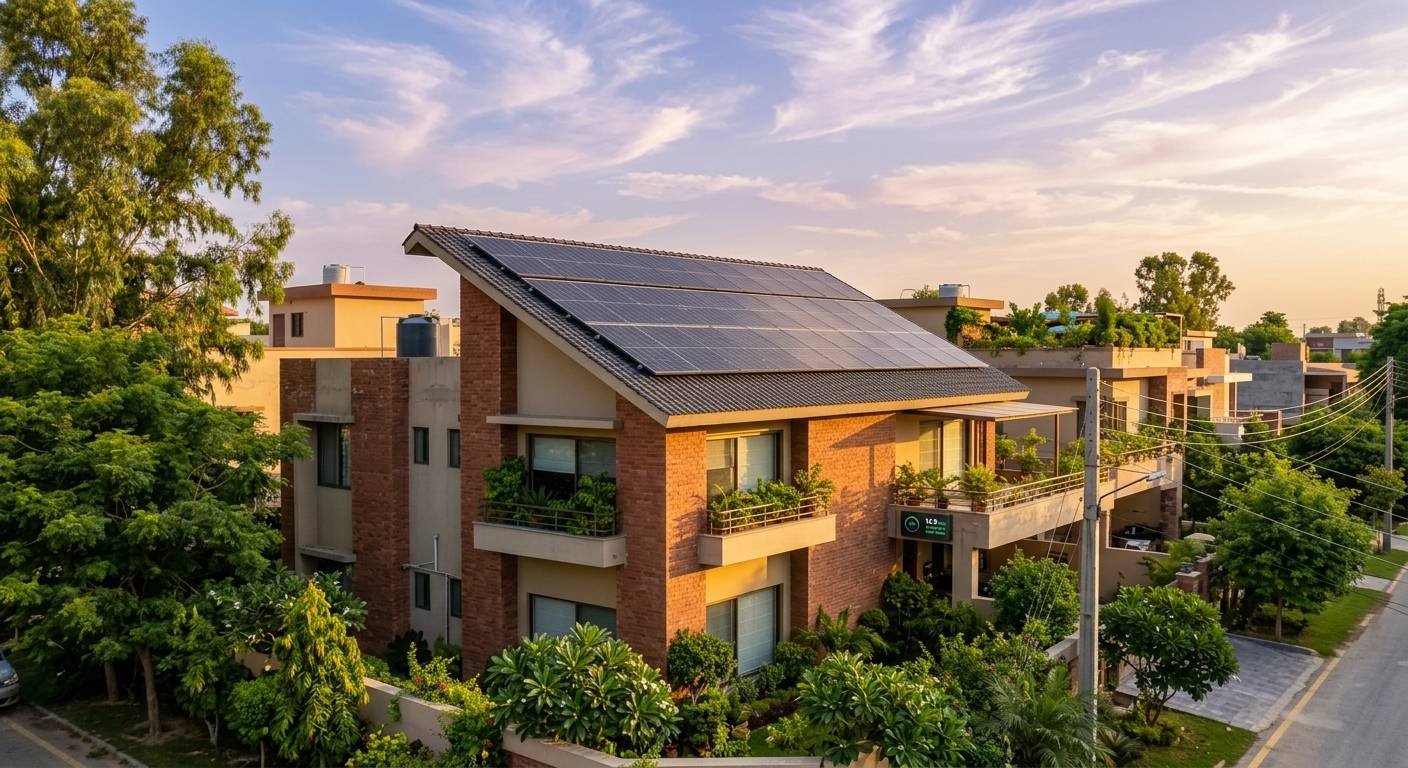
Let's get straight to it. If you buy or finance a solar system with cash or a loan in 2026, the federal government isn't giving you a dime back on your taxes. That 30% credit — the one solar companies have been talking about for years — is gone for good as far as homeowner-owned systems go.
This happened because of a law called the One Big Beautiful Bill Act, signed in July 2025. It moved up the end date for this credit by about seven years. So if your system gets installed and turned on anytime in 2026 or later, you're paying full price. No phase-down, no partial credit, no grace period. It just stopped on January 1.
That's obviously a big deal if you were planning your solar budget around getting a chunk of it back. But don't let this scare you off just yet — there's more to the story below.
If your panels were up and running by December 31, 2025, good news — you're fine. You can still claim your 30% credit when you file your 2025 taxes. And here's something a lot of people don't realize: if your credit is bigger than what you owe in taxes that year, you don't lose the rest of it. It carries forward. So if you had a $15,000 credit but only owed $9,000 in taxes, the leftover $6,000 rolls into next year, and the year after that, for as long as it takes to use it up. There's no cutoff date on the carryforward — only the credit itself expired, not your ability to use what you already earned.
Basically: the finish line was December 31, 2025. If you crossed it, you're covered. If not, this particular credit is off the table.
Here's the part that trips people up, so let's keep it simple.
Section 25D was always the credit for people who own their system — whether you paid cash or took out a loan. That's the one that just ended.
But there's a completely different credit, Section 48E, that businesses can claim. And this matters to you because solar leasing companies and PPA (power purchase agreement) providers count as businesses. So when a company installs solar panels on your roof but technically owns them — like in a lease or a PPA deal — that company can still claim a federal tax credit on their end, currently good through 2027.
You don't get the credit directly in this setup. But the savings usually show up in a different way: lower monthly lease payments, or a lower rate per kilowatt-hour on your PPA. The company is basically passing some of that tax benefit down to you through your bill instead of through your tax return.
So the real question for 2026 isn't "can I still get a tax credit for solar" — it's "do I want to own my system outright, or let a company own it and pass some savings my way instead." Both paths still exist. They just work differently now.
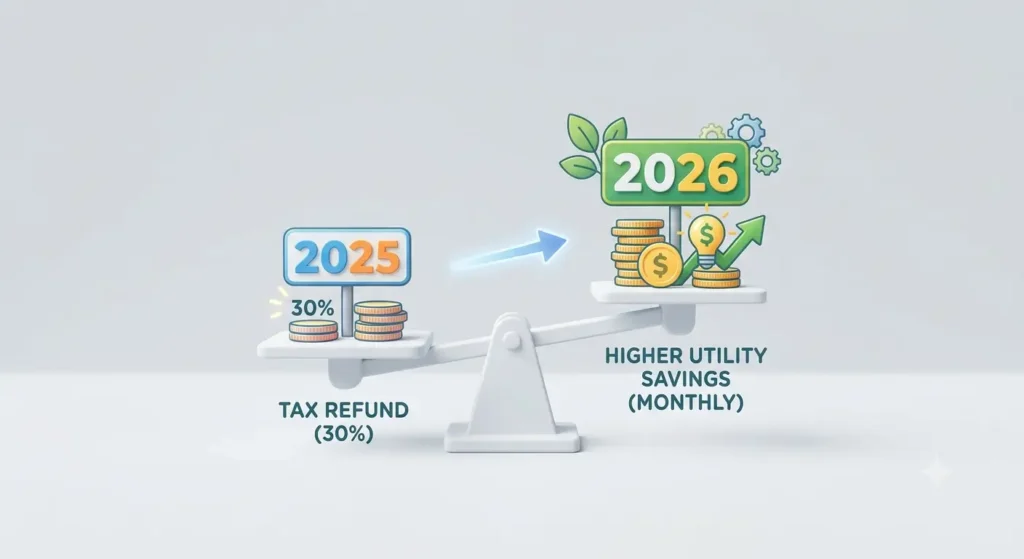
The federal tax credit is gone for direct ownership, sure. But that doesn't mean the savings dried up. There's actually still a decent list of things worth checking before you assume solar isn't worth it for you.
This is the one people skip, and honestly, it shouldn't be skipped. A lot of states never touched their own solar incentives. New York, for example, still offers homeowners a 25% state tax credit worth up to $5,000. New Mexico offers 10% up to $6,000. Some states have rebate programs on top of that.
Here's the catch — every state does this differently. Some have generous credits. Some have almost nothing. A few even have local utility rebates layered on top of state ones. You genuinely can't assume anything here. Look up your specific state (the DSIRE database is a solid free tool for this), or just ask your installer to break it down for your zip code.
Okay, this is the big one. Net metering is basically the deal where your utility credits you for the extra power your panels send back to the grid. It's been the real engine behind solar savings for years, way more than the tax credit ever was.
Now, some states changed how this works. California is the clearest example — they moved to what's called NEM 3.0, which pays a lot less for exported power than the old system did. We're talking roughly 75% less. That change alone made battery storage go from "nice to have" to "basically required" if you want your California system to pencil out.
But — and this matters — not every state did this. Plenty of states, like New Jersey and New York, still credit you at close to the full retail rate for what you export. So "net metering" isn't one national rule. It's a state-by-state, sometimes utility-by-utility thing. You have to check yours specifically.
Time-of-use rates play into this too. If your utility charges more for electricity in the evening than during the day, and your system is paired with a battery, you can store cheap daytime solar power and use it during those expensive evening hours instead of buying from the grid. That's real, ongoing money in your pocket, every single month, for as long as you own the system.
Batteries lost their federal credit too, along with the panels. But some states didn't let that stop them. California, for instance, still runs a program called SGIP that pays out per kilowatt-hour of battery capacity you install — and it pays even more if you're in a high fire-risk area or qualify as low-income.
Some utilities also run their own backup incentive programs, separate from state ones. These usually aren't huge, but a few hundred dollars here and there adds up. Worth a quick call to your utility before you finalize anything.
This one's easy to forget because it doesn't show up as cash in your hand — but it's real money. Most states won't raise your property taxes just because your home value went up from adding solar. Without that exemption, you'd basically be paying more taxes every year for improving your own home, which isn't a great trade.
A lot of states also skip the sales tax on solar equipment altogether. It's not flashy, it doesn't get mentioned in most solar ads, but it quietly shaves a real chunk off your upfront cost.
Put together — state credits, net metering, battery rebates, and tax exemptions — these can still add up to a meaningful amount, even with the federal credit off the table. The trick is nobody bundles this for you automatically. You have to actually go looking.
Okay, let's talk actual numbers. Because "solar saves you money" means nothing until you see what that looks like on paper.
Right now, a typical home solar system costs somewhere between $20,000 and $30,000 before any incentives. That's for a standard 6 to 10 kW setup, which covers most average-sized homes. Prices run roughly $2.55 to $3.35 per watt installed, depending on your location and which panels you go with.
Without the federal credit, most homeowners are looking at a payback period of 8 to 14 years. That's a wide range, and here's why — your state makes a huge difference. If you're in a state with high electricity rates and decent incentives, you could be closer to 7 or 8 years. If you're somewhere with cheap electricity and weak state programs, it could stretch to 15 years or more.
Let's make this real with an example. Say you're in New Jersey, where electricity is expensive and the state still offers solid incentives. A $25,000 system might pay itself back in around 8 years. After that, every single month of solar power is basically free money in your pocket, and panels typically last 25 years or longer. That's 17 years of pure savings after breakeven.
Now flip it. Say you're in a state with cheap power and barely any state incentives left. That same $25,000 system might take 13 or 14 years to pay back. Still worth it if you're staying in your home long-term — but it's a very different decision if you're planning to move in five years.
Here's a simple way to think about it, no spreadsheet needed: divide what you'll actually pay (after any state credits and rebates) by how much you're saving on your electric bill each year. That number, in years, is roughly your payback period. Simple math, but it changes everything about whether solar makes sense for you specifically.
One more thing worth mentioning — don't just look at the payback number and stop there. A system that pays for itself in 12 years but then keeps saving you money for another 13+ years is still a solid investment. It's just a longer runway than it used to be.
Honestly, the fastest way to know where you stand is to just run your own numbers. Your electric bill, your roof, your state — all of it changes the math, so a national average only tells you so much.
Try our free Solar Sizing & ROI Calculator — plug in your details and see your real payback period and savings, not just a rough guess.
Let's flip the question around. Instead of "is solar worth it," let's ask: worth it for who? Because the answer really does depend on your specific situation.
If your electric bill is already high, solar hits different for you.
Think about it. The more you're paying every month, the more you have to save. A $250 bill offers way more room for savings than a $60 one.
Big families. Home offices running all day. AC blasting through summer. Pool pumps. All of that adds up fast — and all of that makes solar pay off quicker.
Simple rule: the higher your bill, the shorter your payback period usually is.
This one's obvious, but it's still worth saying clearly: your roof matters. A lot.
South-facing roofs with no trees blocking the sun? That's the dream setup. Panels there will produce close to their full potential, month after month.
Now picture the opposite. A shaded, north-facing roof with big trees around it. Even top-tier panels won't save you much there. No amount of good marketing changes basic physics.
Before you get excited about solar, actually look at your roof. Walk outside. Check the shade pattern at different times of day. It tells you more than any brochure will. shorter your payback period usually is.
Solar is a long game. It's not a quick flip.
If you're staying put for at least 5 years, and ideally longer, the math works in your favor. You get past the payback period. Then everything after that is just savings, year after year.
But if you're planning to move soon? The equation changes completely. You might sell your house before you even break even on the system.
This one factor alone — how long you're staying — can decide whether solar is a smart move or a bad one for your exact situation.
Where you live plays a bigger role than most people realize.
States with expensive electricity and generous net metering? Solar tends to pay off fast there. You're saving more per kilowatt-hour, and you're getting good credit for what you send back to the grid.
States with cheap power and weak net metering? The savings shrink. Sometimes by a lot.
So before you compare notes with a friend in another state, remember — their solar numbers and your solar numbers might not look anything alike. Same panels. Completely different outcome.
Now let's talk about the flip side. Solar isn't right for everyone. And honestly, it's better to know that now than after you've signed a contract.
If your roof sits under a canopy of trees, or faces the wrong direction, solar gets tough.
Panels need sun. That's the whole deal. Without it, they just don't produce enough power to justify the cost.
Even a few hours of daily shade can knock down your output significantly. And no, trimming one branch won't fix a roof that's shaded most of the day.
If this sounds like your house, get an actual site assessment before you spend a dime. Don't just trust a sales pitch.
Here's the honest truth: solar takes years to pay off. Usually 8 to 14 years these days.
If you're planning to sell in the next 2 or 3 years, you probably won't get there. You'll pay for a system and then hand the savings over to whoever buys your house next.
Yes, solar can raise your home's resale value a bit. But it rarely covers the full cost you put in, especially on that short a timeline.
If a move is already in your plans, this might not be your moment for solar.
If you're renting, solar ownership isn't even on the table. You can't install panels on a roof you don't own, and no landlord is handing out that kind of permission easily.
But that doesn't mean you're stuck with zero options. There are renter-friendly ways to get some of the same benefits — smaller, portable setups that don't need a permanent install.
We cover all of that in a separate guide made just for renters, worth checking out if this is you.
Remember, net metering is what pays you back for extra power your panels send to the grid. Some states are generous about it. Others, not so much.
A few states barely have any net metering policy at all. In those places, your export credits are low, or basically nothing.
That changes the whole math. Your system produces the same power either way — but you get paid way less for the extra you don't use.
Before committing, look up your state's specific net metering rules. Don't assume they're good just because your neighbor state has a great deal.
Let's clear up a few things people keep getting wrong about solar. Some of this is outdated info. Some of it was never true to begin with.
This is the big one going around right now. And it's just not accurate.
Yes, losing 30% off the top hurts. Nobody's denying that. Payback periods got longer.
But "longer" isn't the same as "not worth it." State credits still exist in a lot of places. Net metering is still doing the heavy lifting it always did. Electricity prices keep climbing every year, which makes your solar savings worth even more over time.
Reality check: solar without the federal credit still saves most homeowners real money over 20-25 years. It's just a slower start than before.
This one shows up a lot online, and there's really no solid evidence behind it.
Solar panels don't emit anything while they're sitting on your roof making electricity. No fumes. No radiation you need to worry about. Nothing leaking into your home.
The confusion usually comes from unrelated stuff — old wiring myths, or general fear around anything electrical. But a properly installed solar system is no different from any other electrical appliance in your house.
If someone tells you solar panels are making them sick, that claim just doesn't hold up.
This is probably the myth that costs people the most money.
Solar salespeople love a clean, simple pitch. "Everyone saves with solar." Sounds great. Isn't true.
Your roof, your bill, your state, how long you're staying — all of it changes the outcome. What works great for your neighbor might be a bad deal for you.
Two houses on the same street can get completely different results from the same size system. Different roof angle. Different shade. Different electric usage.
Bottom line: run your own numbers before deciding anything. Don't copy someone else's decision and assume it applies to you.
Solar is a good investment. But the industry also has its share of pushy, shady sales tactics. Knowing what to watch for saves you a lot of headache.
Never go with the first company that knocks on your door.
Seriously. Get at least three quotes, from three different installers. Prices for the exact same system can vary by thousands of dollars.
Compare the equipment, not just the total price. One quote might use cheaper panels to look like a better deal. Read the specs, not just the number at the bottom.
And take your time. A good installer won't pressure you to sign today.
Nothing about solar is free. Nothing.
If someone tells you they'll put panels on your roof for zero dollars, read the fine print. It's usually a lease or PPA in disguise, with terms that aren't nearly as good as they sound.
Same goes for wild promises. "Eliminate your bill completely." "Guaranteed savings, no matter what." Those are red flags, not selling points.
Ask direct questions. Get everything in writing. If they dodge specifics, walk away.
This is where a lot of people get burned. Not on the panels themselves — on the paperwork.
Buying with cash means you own everything outright. Full savings, full responsibility for maintenance too.
Financing means you own the system, but you're paying it off over time, usually with interest. Still your asset, still your savings, just spread out.
Leasing or a PPA means the company owns the system, not you. You get lower payments, but you don't get the tax benefits, and reselling your home can get complicated with a lease attached.
Read every page before you sign. Ask what happens if you sell your house. Ask what happens if the company goes out of business. These aren't rude questions — they're necessary ones.
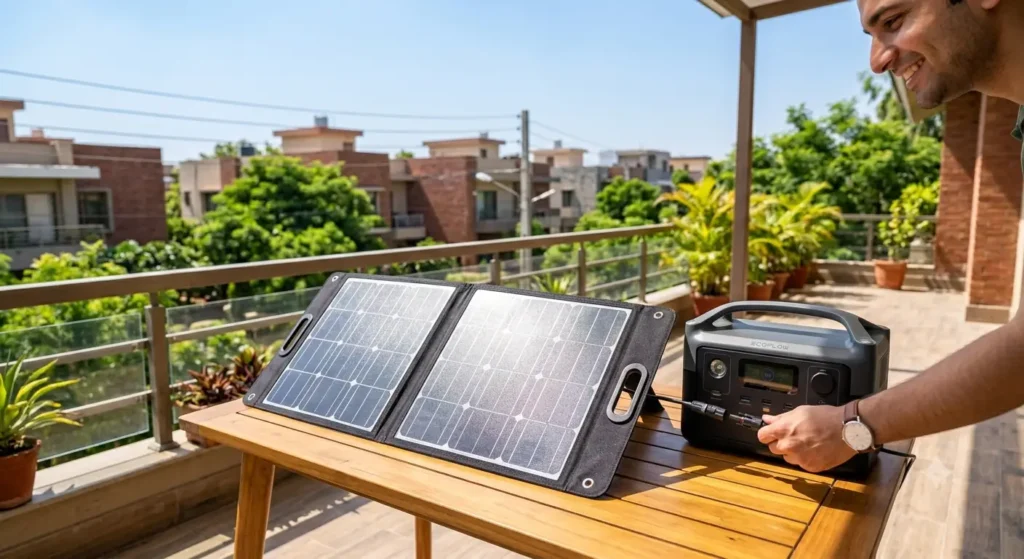
Renting a place doesn't mean you're stuck paying full price for electricity with no options.
You can't install a full rooftop system. That part's true. But portable solar setups exist, and they don't need permission from a landlord or a permanent roof install.
Small solar panel kits. Balcony solar setups. Portable power stations you charge and use when needed. These won't replace your entire electric bill, but they can chip away at it.
Check out our full guide on renter-friendly solar options — it walks through exactly what's available and how to get started, even if you're moving again next year.
So, back to the original question. Is solar still worth it in 2026, without the tax credit?
For a lot of people, yes. Just not automatically.
The federal credit is gone, and that's a real loss. No point pretending otherwise. But state incentives, net metering, and rising electricity prices are still doing a lot of work in the background, quietly.
If you use a lot of power, get good sun, and plan to stay in your home a while — solar still makes strong financial sense. If you're renting, moving soon, or dealing with a shaded roof, it might not be your moment. And that's okay too.
The honest answer isn't yes or no. It's "run your own numbers." Your bill, your roof, your state — that's what actually decides this, not a headline about a tax credit.
Want to see where you stand? Try our free Solar ROI Calculator — takes a few seconds, and gives you real numbers based on your actual home, not a national average.
Disclaimer: This post contains affiliate links. If you make a purchase through these links, I may earn a small commission at no extra cost to you. I only recommend products I truly believe in.
Pingback: My Landlord Said No to Solar Panels — What I Did Instead